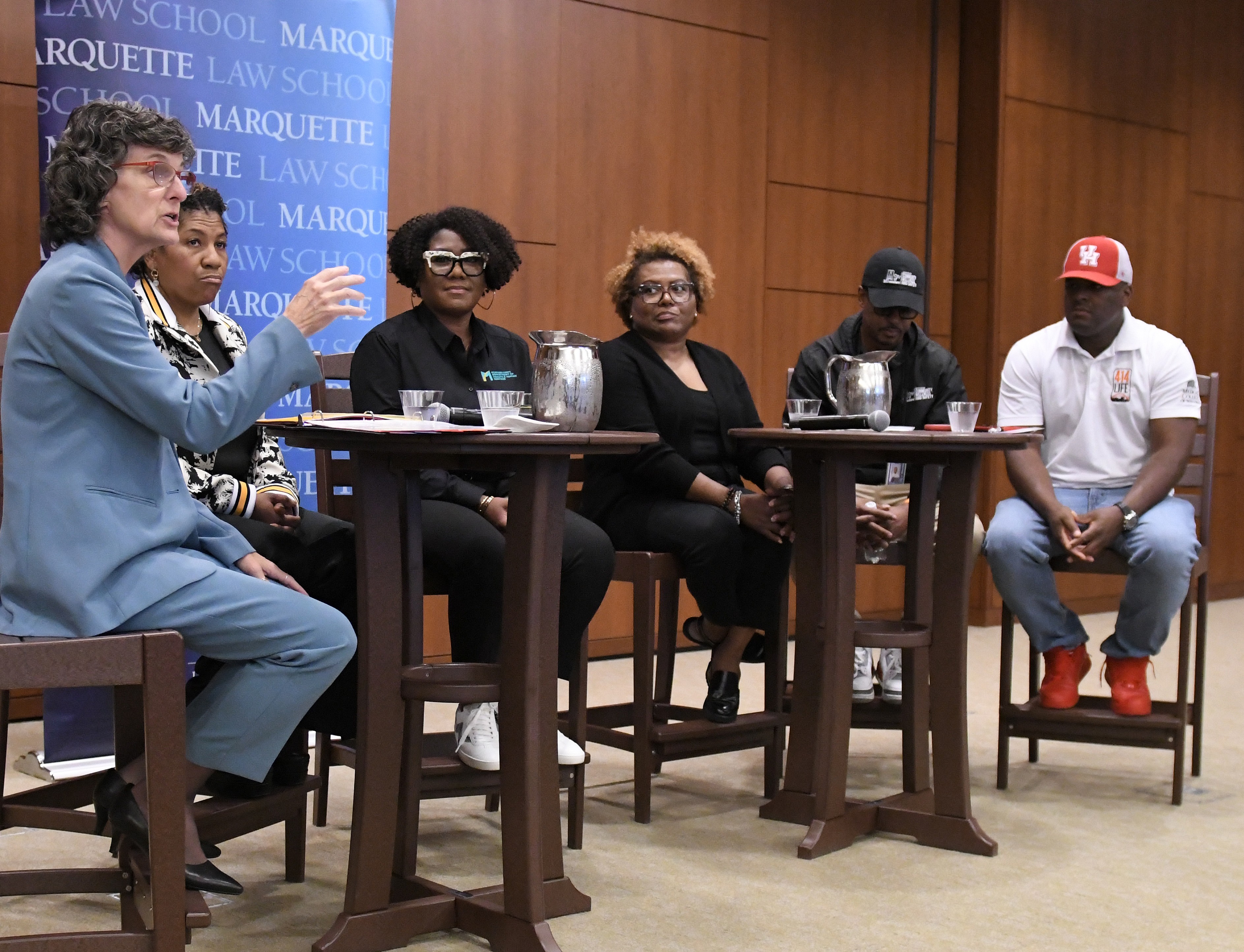
The Union of Restorative Justice, Health Care, and Street Outreach: A Healing Approach to Preventing Gun Violence (Fall 2024 Conference)
The Andrew Center for Restorative Justice at Marquette University Law School envisions justice through a lens focused not on punishment but on healing. Thanks to a $7 million endowment from alumni Louis (Law ’66) and Suzanne Andrew (Sp ’66), the Andrew Center continues the pioneering work of former Wisconsin Supreme Court Justice and Distinguished Professor of Law Janine Geske, transforming lives through dialogue and empathy.
Restorative Justice (RJ) prioritizes humanity, bringing together victims/survivors, offenders, and communities in “circles” and through other facilitated dialogues to confront harm, seek understanding, and foster well-being. Inspired by Native American traditions, circles create space for voices often silenced in traditional systems. Victims/survivors share how crime affected their lives; offenders face the human impact of their actions. The results can be profound: healing, forgiveness, accountability, and even redemption.
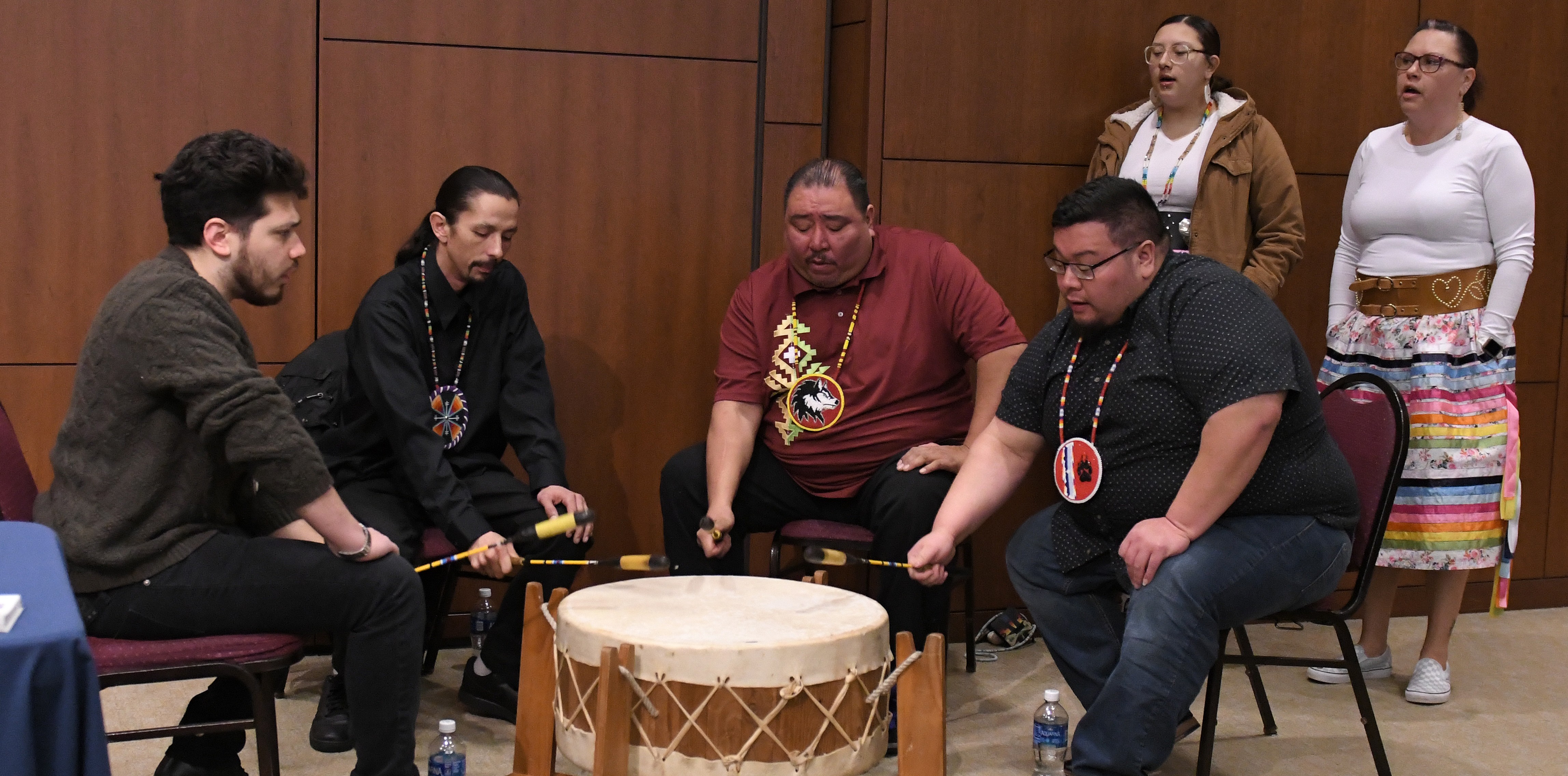
Restorative Justice in Indian Country: Speaking the Truth, Instilling Accountability, and Working Toward Healing (Spring 2024 Conference)
The Andrew Center’s roots trace back to Professor Geske’s outreach to the Green Bay Correctional Institution, where she began leading intensive RJ circles in 1999 as part of her work at Marquette Law School upon leaving the Wisconsin Supreme Court. The emotional depth and transformation she witnessed inspired her to bring RJ into the classroom, exposing law students to this formidable tool.
Today, under the leadership of Hon. Mary Triggiano, former chief judge of the state’s largest trial court, and Assistant Clinical Professor of Law Rebecca Donaldson, the Andrew Center is expanding that vision. The endowment has become a catalyst, allowing students to study RJ in the classroom and experience its power in some of the most difficult “clinical” contexts. For donors Louis and Sue, it’s all about teaching students about RJ so they take what they learn into the world to create positive change.
Through the RJ Workshop, second- and third-year students learn the principles of restorative justice, engaging in teaching circles. These circles can reveal the power of connection even in the face or wake of profound violence — for a father whose daughter was murdered by a family friend, for a man formerly incarcerated as a teen who now mentors others, and for a survivor of the 1994 Rwandan genocide.
The RJ Clinic immerses students in practice. Spending three days at Racine Correctional Institution, they sit in circles with survivors of violent crime and incarcerated men, engaging in raw, honest conversations about harm, hope, and healing. As Triggiano describes,
“in sharing their own stories of loss and resilience, students discover the shared humanity at the heart of justice — an insight they will carry forward into their professional lives.”
The Andrew Center goes beyond teaching our students, driving community well-being. Professors Triggiano and Donaldson have trained violence interrupters and police officers in RJ practices and, with Sojourner Family Peace Center, are exploring ways RJ might help address domestic abuse in families affected by intimate partner violence. Even within Marquette, the Andrew Center facilitates circles to navigate conflict and change in the campus community.
Endowed support is the backbone of the center’s work.
Because RJ is a journey — dialogues can take months or years to prepare — the endowment provides time and resources essential to change lives. With that strong foundation, the Andrew Center is poised to take RJ to the next level by teaching and training future generations to reshape our society’s pursuit of justice into something more humane and responsive.